Airborne precautions PPE is built around one device: a fit-tested, NIOSH-approved N95 respirator or a higher-level model. Germs at this tier ride droplet nuclei, particles under five micrometers that stay aloft and drift far. Tuberculosis, measles, and chickenpox drive the category. The Centers for Disease Control and Prevention pairs the respirator with a room under negative pressure.
This guide covers the respirator, the fit test, the room, and the cost picture behind each. Requirements below trace to CDC, OSHA, and FDA sources listed at the end. The aim is a purchase brief, not a manual. Readers following this should also see Contact Precautions PPE: The Kit, Sequence and Room Setup.
Respirators come first in airborne precautions PPE
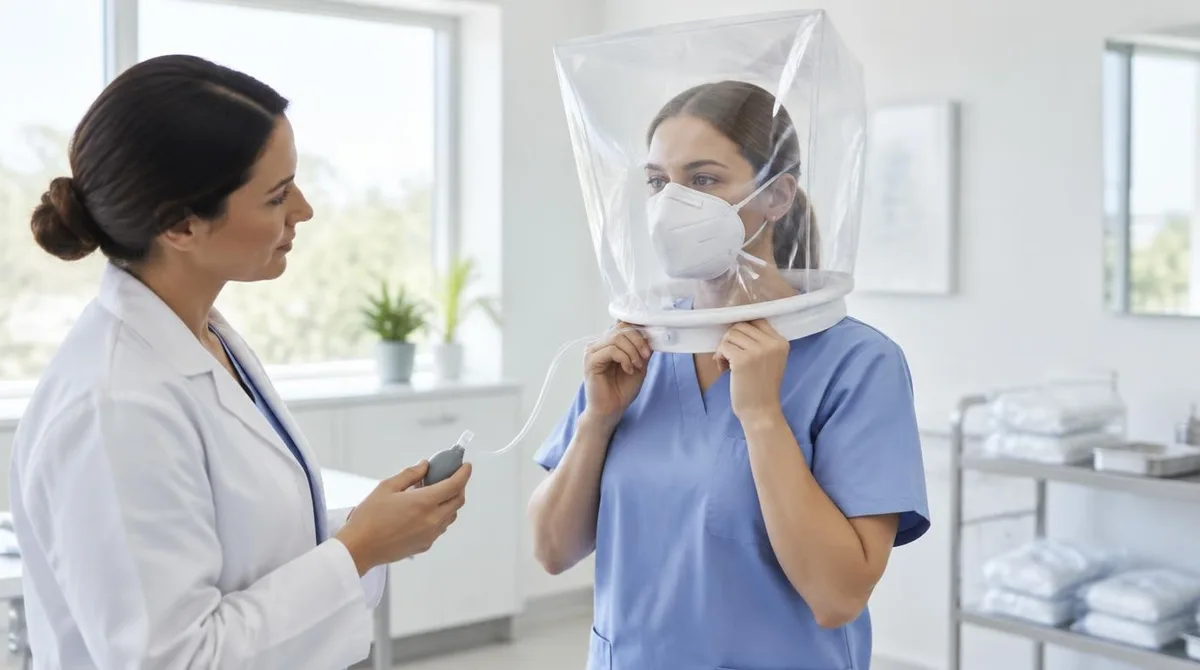
CDC requires a fit-tested, NIOSH-approved N95 or higher-level respirator. The rule covers staff caring for these patients. A surgical mask is not a substitute here. The FDA describes the N95 as a device built for a very close facial fit. Its edges seal around the nose and mouth. That seal is the whole point. Air moves through the filter, not around the gaps.
Facial hair breaks the seal, the FDA cautions. Models with exhalation valves carry limits as well, since valves do not filter what the wearer exhales. Surgical N95 respirators add fluid resistance. They hold FDA clearance as class II devices under 21 CFR 878.4040. Those fit procedures where splash risk meets airborne risk.
Fit testing and the written program
OSHA standard 1910.134 governs the program side. Fit testing comes before first use and at least every year after. Methods run qualitative or quantitative. A medical evaluation screens each employee first, at no cost to the employee. Training covers use, care, and the limits of the device. A seal check happens at every wearing.
The written program ties these pieces together. It names a program administrator and sets selection procedures. It records fit test results by make, model, and size. Those records drive procurement. The respirators on the shelf must match the models staff were fitted for. A model change means a new fit test, so supply lists and fit test logs travel together.
Negative pressure rooms explained
The room is the second half of the tier. CDC calls it an airborne infection isolation room, or AIIR. The CDC glossary defines it as a single-occupancy room under negative pressure. Air changes run six to twelve per hour. Exhaust goes outside or through HEPA filtration. Negative pressure keeps air flowing in, not out, when the door opens. Pressure checks belong on a maintenance calendar.
When no AIIR exists, CDC offers a fallback. Staff mask the patient, use a private room with the door closed, and arrange transfer. Sites without such rooms plan transfers with a partner facility in advance. Transport stays limited. Susceptible staff step away from vaccine-preventable diseases like measles. Exposed people get immunized per CDC guidance.
What ownership costs beyond the box
Airborne precautions PPE ownership runs past the device itself. Respirators cost more than masks. Yet the device is not the main line. Fit test kits or machines form one line. Medical evaluations, retest time, and recordkeeping form the rest. Room upkeep adds filters, airflow checks, and monitoring hardware for pressure checks. Budgets that skip these lines buy half a program. Readers following this should also see Droplet Precautions PPE: What to Wear and When.
Stocking matters at the item level. Each clinician needs the exact make, model, and size that passed the fit test. A mixed shelf of untested models creates compliance gaps, not savings. Shelf counts should cover every fitted size, plus a buffer for surge months.
Conclusion: verify every link before buying
An airborne program is a chain: respirator, fit test, room, records. A weak link voids the rest. Buyers should ask which links a vendor supports and which stay in-house.
The sourced checklist item comes from CDC. Staff use a fit-tested, NIOSH-approved N95 or higher-level respirator for every patient on airborne precautions. Match the purchase order to the fit test log before the boxes arrive.