Contact precautions PPE is the gown-and-gloves kit worn for patients whose germs spread by touch. The rule covers every interaction that may involve the patient or the patient's environment. A bed rail, a blood pressure cuff, or a doorknob can carry the risk. The Centers for Disease Control and Prevention groups these measures under transmission-based precautions.
This article breaks the category into working parts: the kit, the donning order, the room, and the supply math. Each claim traces to CDC or OSHA sources listed at the end. The goal is a purchase list, not a policy essay.
What goes into contact precautions PPE
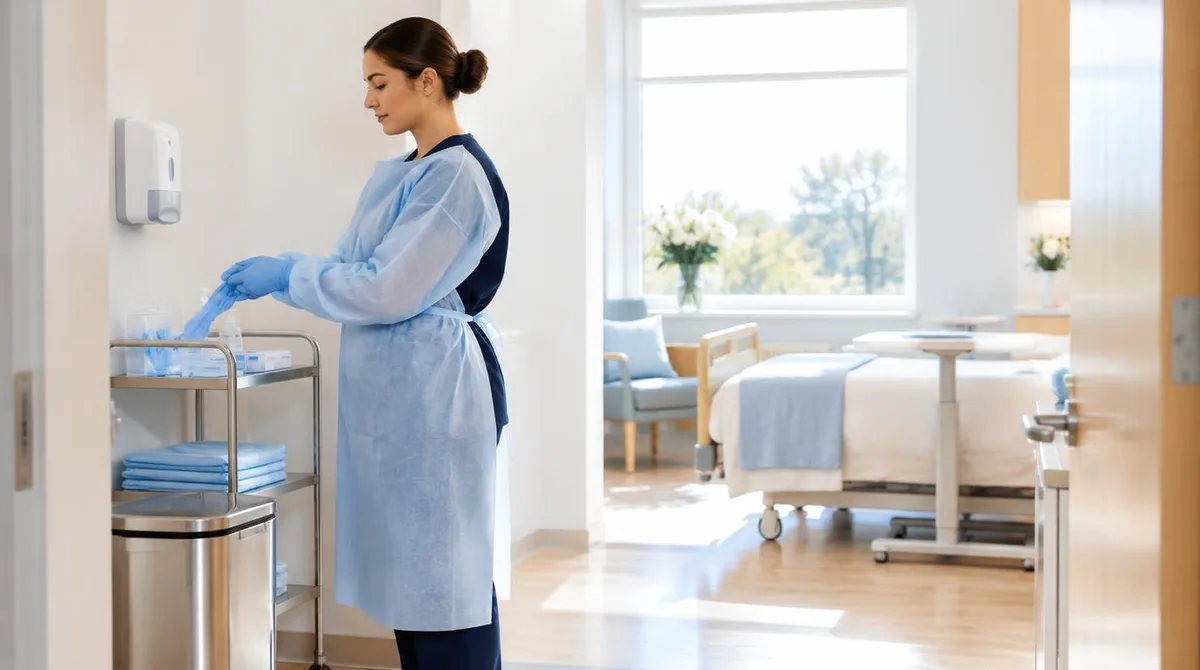
CDC keeps the core list short. Staff wear a gown and gloves for all interactions that may involve contact with the patient or the patient's environment. Gear goes on at the door and comes off before the staff member exits. Gloves are exam-style and single-use. The gown covers the torso from neck to knees and secures at neck and waist. Gowns come in sizes, and one size rarely fits a full staff.
The rest of the kit follows the task. A mask and eye protection appear when splash or spray is possible. That overlap with standard precautions is normal. Contact precautions sit on top of standard precautions, never in place of them.
Donning and doffing in the CDC order
The CDC poster on PPE sequence fixes the order. Gown first, then mask or respirator, then goggles or face shield, then gloves. Gloves pull over the gown cuffs. That order exists because the hands do the final work and get protection last.
Removal runs the reverse way. Gloves come off first, then eye protection, then the gown, then the mask. Hands get cleaned right after the last piece. Skipping the order moves germs from the gown to the face, which defeats the whole kit.
Room setup and equipment decisions
Placement drives the supply plan. A single room works best, CDC notes, when one is available. Shared space calls for physical separation and stricter attention to the environment. Transport stays limited, and patients who must move wear gear suited to the route.
Equipment choices carry weight here. CDC advises dedicated or disposable equipment for these rooms. A shared stethoscope needs cleaning between patients, so clinics often buy low-cost duplicates instead. Room cleaning gets priority on the daily schedule, at least once a day. Signs at the door state the tier and the kit it requires. A cart or cabinet outside the room keeps that kit visible and close.
The volume math behind supply orders
Contact precautions PPE burns supplies per interaction, not per shift. A patient with ten touchpoints a day can consume ten gowns, or fewer when care is batched into blocks. A chart audit shows which pattern a clinic actually runs. Census swings change the burn rate, so reviews belong on a calendar. Gloves follow hand contact and get replaced the moment they show wear or contamination. This connects to our earlier piece, Droplet Precautions PPE: What to Wear and When.
OSHA adds the cost anchors. The bloodborne pathogens standard requires gloves whenever contact with blood or other infectious material can reasonably be anticipated. It also requires handwashing facilities that are readily accessible. Both lines belong in any budget built around this tier.
Conclusion: walk one full patient encounter
Before signing any contact precautions PPE order, trace one patient from door to door. Check that the cart outside the room holds gowns in the sizes the staff wears. Check the glove sizes too, since a bad fit slows every entry. Confirm the hand hygiene station sits within reach of the exit path.
The sourced checklist item comes from CDC. A gown and gloves go on for every interaction that may involve the patient or the patient's environment. Count those interactions for one week, then size the contract.