
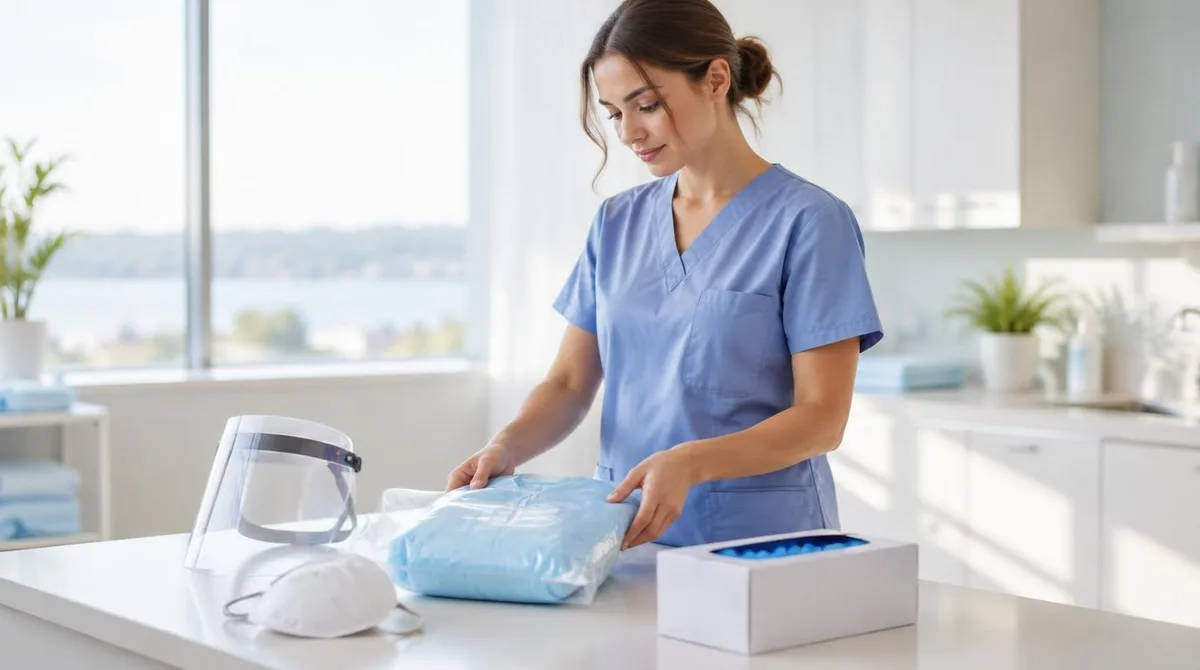
The PPE meaning in health care is direct. Personal protective equipment is any gear that shields workers from germs, fluids, chemicals, and injury. NIOSH, the CDC institute for worker safety, lists respirators, protective clothing, and eye safety under the term. Gloves, gowns, masks, and eye covers all belong in the set. The point of every item is the same, a barrier that keeps a hazard away from a person.
The term also carries legal force. Federal rule 29 CFR 1910.132 orders employers to supply the gear, train each worker on it, and pay for replacements. Damaged gear stays out of service. The PPE meaning spans two worlds: infection control at the bedside and worker safety law.
What the PPE Meaning Covers in a Clinic
Inside a clinic, the term spans four main product groups. Gloves protect hands from blood and body fluids. Gowns and coveralls shield skin and clothing from splashes. Respirators filter the air a worker breathes. Surgical masks block droplets and sprays. Eye protection guards the face from splatter. Each item counts only when matched to a real task hazard. The risk sets the gear, not the catalog photo. Ratings exist for that reason. Gowns carry barrier levels from one to four under the AAMI rating standard. Level four fits fluid-heavy surgery. Level one suits a basic visit gown. Respirator models also carry approval marks stamped on the unit, and the federal list settles any doubt about a mark. This connects to our earlier piece, Carpal Tunnel Syndrome Medical Devices: Splints, Scans, and Surgical Tools.
How Categories Differ Under the Rules
Items that look alike can sit far apart under the rules. A plain face mask serves source control and is not PPE, per the FDA. A surgical N95 respirator forms a tight seal and counts as a regulated device. NIOSH tests and approves respirators through a federal program. A public Certified Equipment List shows every approved model. Gowns follow a second logic. Surgical gowns need FDA clearance before sale. Plain isolation gowns skip that review in most cases. The label, not the shape, tells a buyer what an item does. A level-one gown in a trauma bay is a safety failure, not a bargain.
What It Costs a Clinic to Own
No federal page posts fixed prices. Box costs shift with brand, volume, and contract tier. The true spend goes well past the invoice. Fit tests, training hours, storage, and wrong sizes add to the tally. Federal law puts the bill for most routine gear on the employer. Replacements sit on that same bill. Budgets that skip training tend to pay later in waste and rework. Volume tiers cut the unit price on paper. That saving shrinks when the wrong size piles up in storage. A tight par level by size and task keeps the math honest. Track waste per month, not price per box. Shipping counts as part of the price too. A torn carton of sterile gowns is a write-off. Freight claims also eat staff time.
Common Gaps That Undo Protection
Most program gaps trace back to labels, not budgets. Counterfeit respirators have reached the market. NIOSH posts alerts on fakes and has acted against false listings. A gown rated low fails in a high-risk room. Stock past its expiry date goes to waste. Training lapses rank as the quiet risk. The federal rule requires proof that each worker knows the gear and its limits. Audits catch the drift fast. Watch for open boxes, sizes that never move, and fit test logs with gaps. Each sign points to money already lost. Suppliers can help with sizing samples before a bulk order, which cuts the risk of dead stock.
Conclusion: What to Check Before an Order
The PPE meaning sets the frame. The label settles the rest. Match each item to a task and its risk level before any order goes out. File the written hazard assessment that the rule demands. Keep the training log current and dated, and repeat the drill once a year. One closing check for any purchase: confirm each respirator against the NIOSH Certified Equipment List. That list is the public record of what passed federal testing, and it takes minutes to search.