
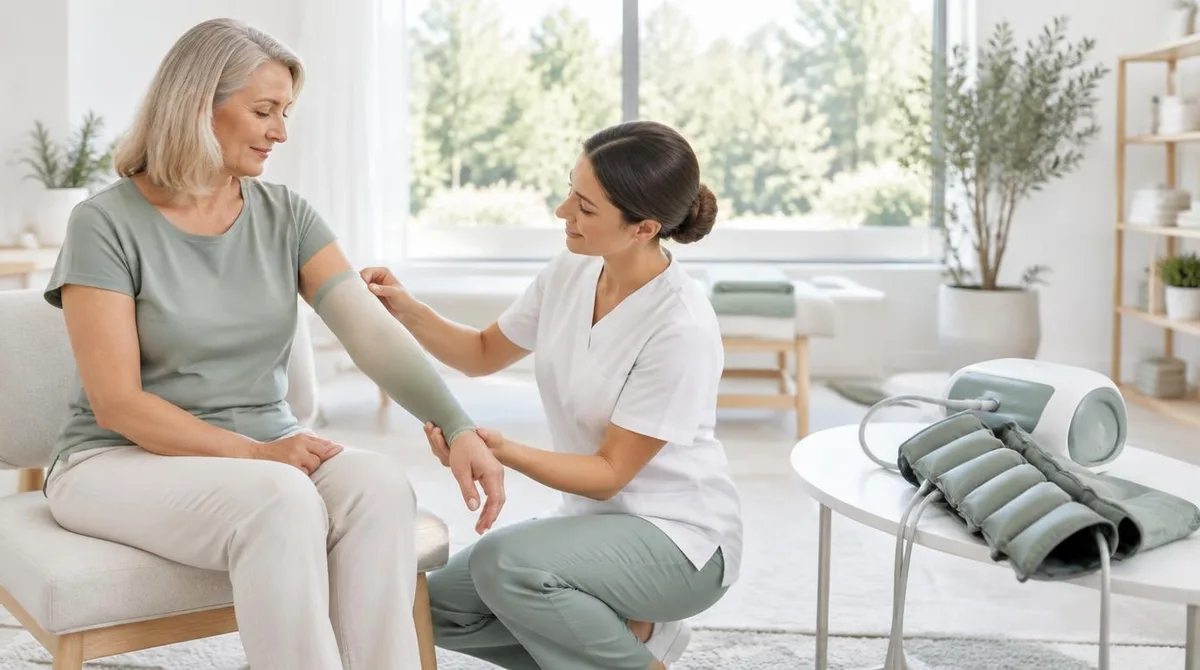
Lymphedema medical devices come in two working forms: compression garments and pneumatic pumps. A garment squeezes the swollen limb to keep fluid moving. A pump wraps the limb in a sleeve and applies pressure in waves. Both are therapy, not cure. Medicare Part B covers each under its own rules, and those rules shape what a clinic can order.
The condition drives the choice. Lymphedema is chronic swelling that appears when the lymph system is damaged or blocked. Fluid collects in soft tissue, most often in an arm or a leg. Cancer treatment is a common cause. Treatment controls the swelling. It does not undo the damage. Early care keeps it mild. Trained hands run the plan. Complete decongestive therapy, as the National Cancer Institute describes it, pairs massage, bandaging, exercise, and skin care.
How a compression garment works
Gradient garments press hardest at the wrist or ankle and ease off up the limb. That slope moves lymph toward the trunk. A certified lymphedema therapist fits the garment and teaches its use. The National Cancer Institute advises daily wear while active, and night wear when a therapist advises it. Garments lose pressure as they stretch, so they need replacement on a schedule.
Fit drives results. A loose garment does nothing. A tight one hurts compliance and can crease the skin. Limbs change size as swelling shifts, so a fresh measure precedes each order. A limb with heavy swelling may need bandaging first, then a garment once the size settles.
How a pump works
A pneumatic pump connects to a sleeve or a sock. The device inflates it in cycles along the limb. The pressure keeps lymph moving and limits fluid buildup, as the National Cancer Institute describes. A therapist sets the pressure and the session length. Pumps support garment therapy between sessions. They do not replace daytime garments.
Home use follows a set routine. Sessions run on a clock, seated or lying down. Skin checks come before and after each run. A limb with broken skin or an active infection waits until it clears.
What Medicare pays
Medicare sorts lymphedema medical devices into two payment lanes. Part B covers gradient compression garments, both standard and custom fitted, plus adjustable wraps and bandaging supplies. A provider must order them. After the Part B deductible, the patient pays 20 percent of the approved amount. CMS sets quantity limits, such as three daytime garments per affected body part every six months. CMS allows replacement when limb size changes, or when items are lost or damaged beyond repair. For related coverage, see Home Medical Supplies: What to Stock, Store, and Replace.
Powered compression devices ride the second lane. Medicare covers them as durable medical equipment when medically necessary, again with a provider order. Only enrolled suppliers can bill these items, and bandage supplies ride the same lane with the same order rules. For rentals, the supplier should accept assignment for all rental months. Otherwise the patient fronts the full cost and seeks repayment. We covered a connected angle in Medical-Grade Red Light Therapy Devices: What the Label Must Prove.
Choosing between lymphedema medical devices
Choice follows the limb and the patient's day. A therapist measures the limb and sets garment class and size. Pumps suit patients with heavy swelling or weak hand function. Bandaging bridges the wait for a custom garment. Skin checks belong at every step, since broken skin raises infection risk.
Reassessment closes the loop. Limb size, skin state, and wear patterns get reviewed at each visit. Orders follow the review, not the calendar alone. A dated note of each fitting keeps the file clean for the next order.
Conclusion: match the device to the limb
Neither device type stands alone, and neither works without fitting and follow-up. Garments hold the gains. Pumps and bandaging win them. One sourced check closes the order. Medicare pays for these items only from enrolled suppliers, so confirm enrollment before the paperwork starts.