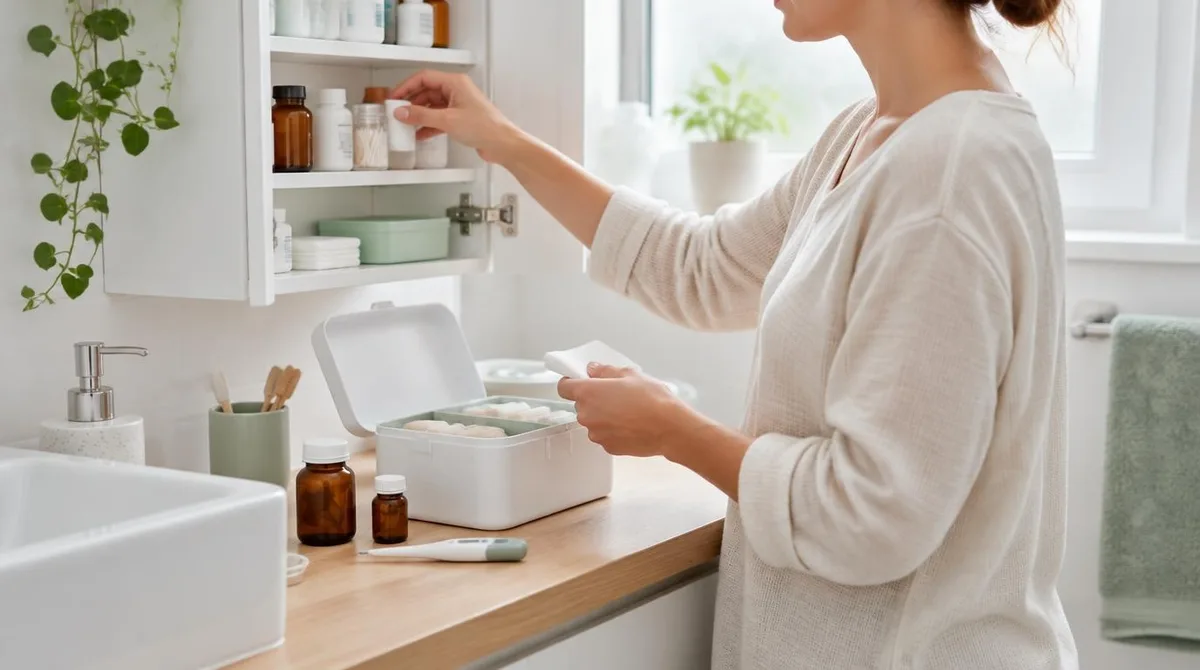
Home medical supplies are the items a home keeps on hand for injury, illness, and daily care. The base is a stocked first aid kit. Around it sit the tools for routine health: a thermometer, over-the-counter medicines, and any prescribed gear. Federal preparedness guidance treats these items as part of a wider emergency kit. A cut, a fever, or a power cut all arrive without an appointment.
What belongs in the cabinet depends on the people in the home. A child, an older adult, or a chronic condition changes the list. This guide sorts the answer into three parts. The base kit comes first, then condition items, then the storage habits that keep both ready.
The Base Kit Most Homes Should Hold
Ready.gov lists the medical core of an emergency kit. It holds a first aid kit, a dust mask, moist wipes, soap, and hand sanitizer. Both prescription and non-prescription medicines belong there too. The wider kit adds water, one gallon per person per day for several days. Flashlights, spare batteries, and garbage bags join it. Eyeglasses and contact solution make the list for anyone who needs them. A manual can opener and basic tools round it out. A thermometer earns its place in the same drawer. Most of the base kit is shelf-stable and cheap to build in one shopping trip. For related coverage, see Carpal Tunnel Syndrome Medical Devices: Splints, Scans, and Surgical Tools.
Home Medical Supplies for Ongoing Conditions
Chronic care adds its own shelf. Insulin needs cool storage and a spare ice pack for trips. A glucose meter needs strips and lancets, and sharps need a proper container. Blood pressure cuffs, compression socks, and nebulizer kits follow the same rule: keep consumables about a month ahead. The FDA notes that sharps containers are FDA-cleared devices, sold in pharmacies and online, with a visible fill line. A heavy-duty plastic bottle with a tight lid works only as a fallback, per the agency. It belongs upright, labeled, and far from children. For related coverage, see PPE Meaning in Health Care: What Counts as Protective Equipment.
Storage Rules That Protect the Stock
Heat, damp, and light ruin more home medical supplies than age does. A bathroom cabinet sits in the worst spot in the house, since showers swing both heat and humidity. A cool, dry, dark cupboard beats it. Keep everything in original boxes so lot numbers and expiry dates stay readable. A written list of prescription refill dates belongs on the same shelf. Lock or raise anything harmful to children. Check that thermometers and meters still work once a year. Store spare batteries apart from the devices, since a leaking cell can kill a flashlight over time.
Rotation and Safe Disposal
Every item with a date needs a calendar entry. Expired medicine loses the battle for space first. The FDA calls take-back sites the best disposal route. They often sit in pharmacies or police stations. Prepaid mail-back envelopes offer another path. A short flush list of high-risk medicines, mostly opioids, is the lone exception for the sink. Everything else goes in the trash. Mix pills with coffee grounds or cat litter, seal the mix in a bag, and black out the label. Pills stay whole. Sharps never go in the trash or recycling loose. The FDA says a sharps container closes at the three-quarter mark and follows local disposal rules.
Conclusion: A Seasonal Check That Takes Ten Minutes
A kit of home medical supplies works only when every item is current. Set a reminder for the change of each season. Pull the kit, toss the expired items, replace what got taken out, and test the flashlight and meter. Note the missing bandage sizes and the medicine counts. One closing check, straight from the FDA sharps page: confirm the sharps container sits below its fill line. Review local disposal rules before it fills further. Ten minutes four times a year keeps a kit honest.