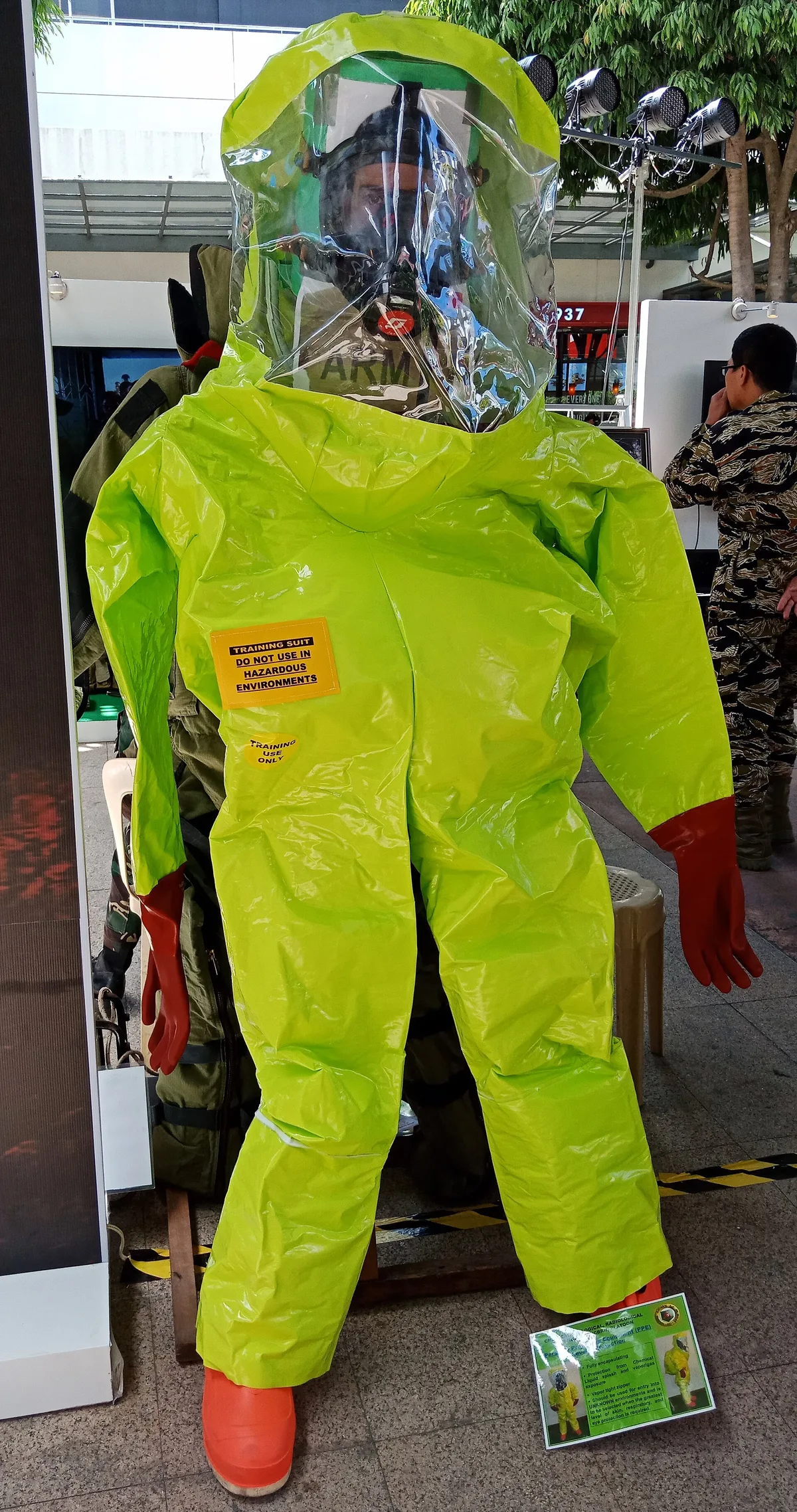
Level A PPE is the top rung of a four level ladder that EPA sets for hazardous response work. Level A means maximum protection for skin, eyes, and lungs: a sealed suit and a self contained air supply. Level B keeps the air supply but relaxes the suit. Level C switches to filtered air. Level D is work clothing with no respirator at all. Each step down trades protection for mobility and work time.
The ladder came out of hazardous waste work. EPA keeps it as the shared map for responders. When site risks are measured and low, the top levels waste money and stamina. When risks are unknown or high, Level A PPE is the default answer. Selection is a hazard assessment task first, and a shopping task second.
What Level A PPE includes
EPA describes the Level A ensemble in full. It pairs a positive pressure self contained breathing apparatus with a totally encapsulating chemical and vapor protective suit. Inner and outer chemical resistant gloves protect the hands. Chemical resistant boots complete the set. The suit seals the wearer off from vapor and liquid alike. EPA ties this level to the greatest exposure potential.
Donning and doffing take time and a helper. OSHA's hazardous waste standard, 1910.120, sets the training that goes with this gear. Written plans list who wears it, for which tasks, and under whose sign off. Readers following this should also see Donning and Doffing PPE: The CDC Sequence Step by Step.
Level B: same air, thinner suit
Level B keeps the highest respiratory protection. It drops the vapor tight seal. The ensemble uses a hooded chemical resistant suit, inner and outer gloves, a face shield, coveralls, and boots. EPA notes the fit with outdoor waste sites where vapor levels do not justify Level A. Lung protection stays equal. Skin protection steps down one notch. We covered a connected angle in PPE Gloves: Materials, Protection Levels, and What Each Type Is For.
Air supply weight shapes the work cycle. Tanks run on a clock. Crews plan rotations before entry, and a backup team stands by outside the hot zone. OSHA's 1910.120 covers this training and the team structure for waste site work.
Level C: filters instead of tanks
Level C applies when airborne contaminants are known and measured. The wearer uses a full face air purifying respirator rather than a tank of air. Chemical resistant clothing, inner and outer gloves, a hard hat, and an escape mask round out the set. The filter must match the named hazard. If the air cannot be measured, this level does not apply.
Escape masks round out the set at sites with a gas risk. They buy minutes, not shifts, and they live at the exit route. The full face piece carries the shift work.
Level D: the baseline
Level D is a work uniform. It may include coveralls, gloves, safety glasses, a face shield, and chemical resistant steel toe boots. No respirator is part of it. EPA limits it to settings with no contaminants, and to work with no splash, immersion, or unexpected contact. Most clinic work never climbs above this level.
In a clinic, Level D plus task gear covers nearly every day. Splash protection for a fluid heavy task. Gloves and eye wear for the rest. The ladder matters when a spill or a transport brings unknowns into the building.
Conclusion: start from the hazard, not the label
Levels describe ensembles, not quality grades. OSHA's general PPE rule requires a written hazard assessment before any level is chosen. The employer pays for what the assessment requires. Written records close the loop. The assessment drives the level. The invoice follows the assessment. EPA notes the levels are guides, not straitjackets, and other gear mixes may fit a site better. One sourced check ends it. Match the selected ensemble to the site's measured hazards, and keep the assessment on file. A yearly drill with the real gear beats a binder full of plans.