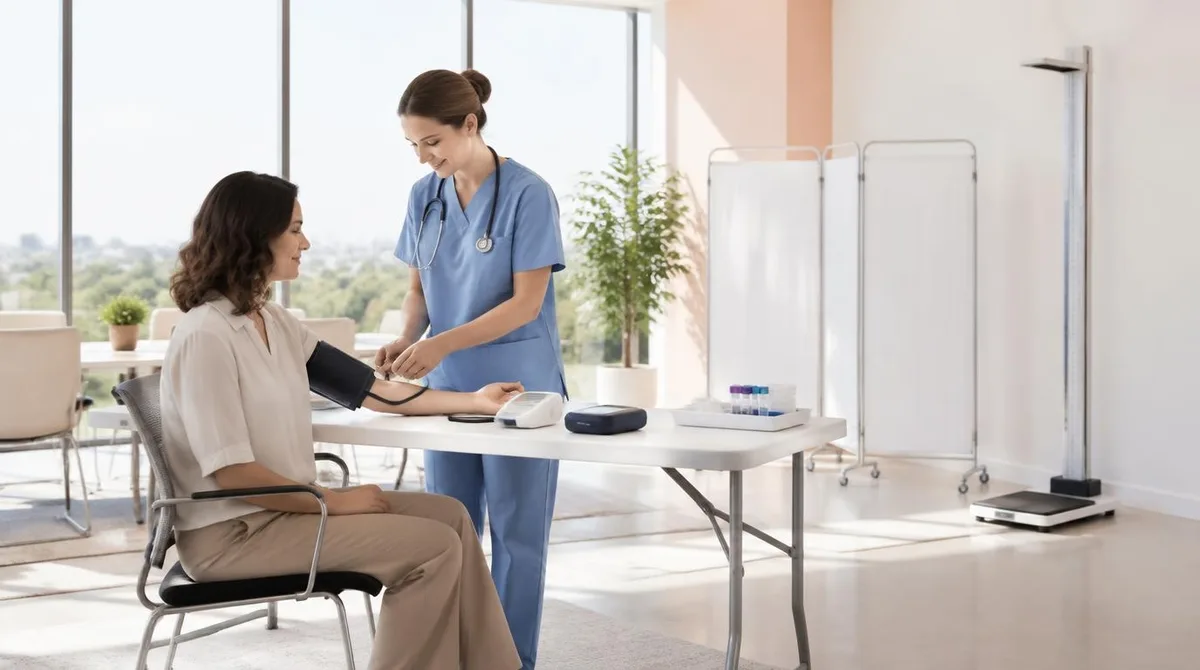
A biometric screening event is a short clinical visit brought to the workplace. Staff measure height, weight, blood pressure, waist circumference and often a small blood sample for cholesterol and glucose. According to Quest Diagnostics, a biometric screening is a set of laboratory tests and measurements that gives people a clearer picture of their overall health, and it is not a replacement for routine care from a primary care provider.
For the clinic or vendor running the event, success depends less on the lab work than on logistics. The right biometric screening event equipment keeps lines moving, keeps samples handled safely and keeps participants comfortable. This article walks through the categories of supplies a screening station needs, where setups differ, and what to check before the doors open.
One note on wording first. The word "biometric" also appears in security contexts. The Department of Homeland Security defines biometrics as automated recognition of people based on biological characteristics such as fingerprints or facial features, used for identity verification at borders and in credentialing. That is a different field. A workplace biometric screening event is a health measurement event, not an identity-scanning exercise, and the equipment lists below reflect that.
What a screening station actually measures
Most workplace events follow the same core set of measurements. Each one drives a specific piece of equipment, so it helps to plan the supply list measurement by measurement. This connects to our earlier piece, Nurse Burnout Symptoms: What to Watch For and What Helps.
- Height and weight: a stadiometer or wall-mounted height rule and a calibrated digital scale, ideally on a hard, level floor.
- Waist circumference: a flexible, non-stretch measuring tape, with disposable or wipeable options depending on your infection-control policy.
- Blood pressure: an automated upper-arm cuff with a range of cuff sizes. A cuff that is too small or too large distorts the reading, so size variety matters more than brand.
- Cholesterol and glucose: a point-of-care analyzer with its matching test cartridges or strips, sterile lancets, and capillary collection tubes where the device requires them.
- Body composition, where offered: a bioimpedance scale, which estimates body fat through a low electrical current. Participants with implanted electronic devices should be flagged before this step.
According to Quest Diagnostics, screenings typically look at clinical factors such as cholesterol and glucose, and repeat participants year over year have shown improvement in those metrics. The measurements are simple. The supplies behind them are where events succeed or stall.
Consumables: the items you will run out of first
Devices last for years. Consumables decide whether the event finishes on schedule. Order these with a buffer, because a station that pauses to hunt for lancets backs up every station behind it.
- Sterile single-use lancets, sized to the analyzer's collection requirements.
- Test strips or cartridges matched exactly to the analyzer model on site. A strip from a different lot or model is not a substitute.
- Alcohol prep pads, gauze and adhesive bandages for the finger stick.
- Disposable probe covers and cuff sleeves for blood pressure equipment, or validated wipes where covers are not used.
- Exam gloves in multiple sizes, plus non-latex options for participants and staff with allergies.
- Hand sanitizer and surface wipes for between-participant cleaning.
- Printed result forms or a tablet-based capture method, plus pens that stay at the table.
A useful planning habit: count expected participants, then assume a share will need a repeat blood pressure reading or a second finger stick. Build that share into the order.
Privacy, seating and flow
Screenings involve numbers people may not want overheard: weight, waist size, blood pressure. Privacy is not a courtesy here; it is part of the clinical setup.
- Privacy screens or folding dividers around the scale and measurement station.
- A separate, quiet area for results conversations, so a nurse can explain a reading without an audience.
- Chairs with armrests at blood pressure stations, because arm support affects the measurement position.
- Clear signage and a simple check-in table, so participants are not asking staff directions while staff are mid-measurement.
- A waste stream that separates regular trash from anything with blood on it.
Flow matters as much as furniture. Most events run stations in sequence, check-in, measurements, finger stick, results, and the layout should let people move in one direction. If you have run a vaccination day before, the same principles apply; our checklist for Corporate Flu Shot Clinics: Supplies, Staffing and Scheduling Checklist covers staffing and scheduling patterns that translate well. Readers following this should also see Corporate Flu Shot Clinics: Supplies, Staffing and Scheduling Checklist.
Biohazard disposal and sharps handling
Any event that draws blood produces regulated waste. The rules vary by state and municipality, so confirm the local requirements with your waste contractor before the event rather than after. In general terms, plan for:
- A puncture-resistant sharps container at every finger-stick station, placed within arm's reach of the person holding the lancet.
- Red-bag or designated containers for items saturated or caked with blood, per your local definition.
- Gloves, gauze and pads with only trace blood, which in many jurisdictions go in regular trash, a point worth confirming in writing.
- A staff member assigned to monitor container fill levels and seal them at the end of the day.
Ask your waste hauler one direct question: what documentation do you provide after pickup? A manifest or receipt closes the loop and is what an auditor will ask for.
What to check before buying or booking
Whether you buy equipment outright or book a screening vendor, the same checks apply. This is our analysis of the decision points that most often get skipped.
- Analyzer and consumable matching. Confirm the exact strip or cartridge model numbers and their expiry dates. Mismatched consumables are the most common cause of a dead station.
- Cuff size range. Ask how many cuff sizes the vendor brings per station, not just how many stations.
- Calibration status. Scales and blood pressure units should have documented calibration. Ask when it was last done and what the record looks like.
- Licensure of staff. Confirm who is performing finger sticks and results conversations, and under whose clinical oversight.
- Data handling. Ask where results go, who can see them, and how they reach the participant. Screening results are health information; the employer should not be the recipient.
- Referral path. Ask the vendor what happens when a reading falls outside a normal range. A screening without a follow-up plan leaves the participant holding a number and no next step.
That last item deserves emphasis. A screening is a snapshot, not a diagnosis. Every result conversation should end the same way: participants with concerning readings are told to follow up with their own clinician, and staff should be able to say exactly what to ask. For example: "My screening showed a high fasting glucose reading. What follow-up testing do you recommend?"
The takeaway for clinic and program planners
A screening event runs on unglamorous supplies: matched test strips, correctly sized cuffs, a sharps container at every stick station, and a divider between the scale and the hallway. None of it is complicated, and all of it is checkable in advance. If you are building a prevention program from the ground up, our Prevention section collects the supply-side pieces in one place, and the Wellness hub covers the program decisions around them.
Close your planning with one sourced checklist item: confirm, in writing, the analyzer model, its matching consumable lot numbers and expiry dates, the calibration record for every measurement device, and the waste contractor's documentation process. Four confirmations, all on paper, before the first participant checks in.